
How to Plan a Golf Tournament (or Charity Fundraiser): The Complete 2026 Guide
A golf tournament looks simple from the outside: book a course, gather some players, hand out prizes. The good ones are not simple at all. They are planned backward from a clear goal, run on a tight day-of schedule, and built so the golfers, the sponsors, and the cause all leave happy. This guide walks through every decision in order, whether you are running a casual outing with friends, a corporate scramble, or a full charity fundraiser trying to raise real money.
How do you organize a golf tournament? Start about nine to twelve months out. Set a clear goal and budget, form a small committee, pick a format (a scramble is easiest for mixed skill levels), and book a course and date. Then line up sponsors, recruit players in foursomes, plan the prizes and on-course games, and build a minute-by-minute day-of schedule. Confirm every detail the week before, and thank sponsors and players afterward while you plan next year.
What this guide covers
- What a golf tournament costs (and how to budget)
- The planning timeline and checklist
- Set the goal and the budget
- Build your committee
- Choose the format (comparison table)
- Pick the course and date
- Line up sponsors (fundraiser tiers)
- Recruit players and promote
- Prizes, gifts, and swag
- Games and contests on the course
- Run the day and follow up
- Frequently asked questions
1. What a golf tournament costs
Cost is the first question most organizers ask, and the honest answer is that it depends on the course and the extras. The course charges a per-golfer rate that usually bundles the round, a cart, and range balls. Everything after that (food, prizes, signage, a photographer) is a choice you make against your budget. Here is a realistic per-golfer range for a field of about 72 players, so you can size your event before you commit.
| Tier | Per golfer | What it usually includes | Best for |
|---|---|---|---|
| Casual | $75 to $125 | Green fee, cart, range balls, boxed lunch, simple prizes | Friends, small company outings |
| Standard charity | $125 to $200 | Round, cart, lunch, tee gift, on-course contests, awards reception, sponsor signage | Most fundraisers and member-guest events |
| Premium | $200 to $400+ | Upscale course, gift bag, catered dinner, open bar, photography, high-end prizes | Corporate and high-donor events |
A charity event flips this math in your favor. You set a registration price above your per-golfer cost, then let sponsorships and add-ons (mulligans, raffles, a putting contest) carry the fundraising. The sponsorship section below is where most of the money is actually raised.
2. The planning timeline and checklist
The single biggest predictor of a smooth event is starting early. Give yourself nine to twelve months. That is the runway it takes to lock a preferred date at a good course, land sponsors before their yearly budgets close, and get custom gifts made and delivered on time. Three months is not enough for a tournament of any real size. Work backward from your date with this checklist.
| When | Get this done |
|---|---|
| 9 to 12 months outThe foundation | Form the committee and assign roles (finance, marketing, logistics), define the purpose (charity or corporate) and set the budget, research and book the course, and choose the format. Top courses book out up to a year ahead, so this is the step that cannot wait. |
| 6 to 9 months outSponsors and branding | Build your sponsorship packages (title, hole, contest), start pitching local businesses and corporate sponsors while their budgets are still open, launch the event page, and open early-bird registration. |
| 3 to 6 months outMarketing and logistics | Ramp up golfer recruiting by email and social, finalize catering, beverage carts, and a tournament director with the course, and order your signage, banners, and sponsor displays. |
| 1 to 3 months outThe details | Gather your raffle and auction items, order player gifts, swag bags, and winner awards while there is time to personalize them, and hire a photographer and line up volunteers. |
| Final month | Finalize player counts and handicaps with the course, set the pairings and starting-hole assignments, and run a final walkthrough with the committee and venue staff. |
| Event day | Set up check-in and signage early, brief volunteers, run the shotgun start, and host the awards reception. |
| After | Thank sponsors and players, share results and photos, note what to change, and book next year. |
3. Set the goal and the budget
Every later decision gets easier once the goal is clear. Are you here to give friends a great day, to build corporate relationships, or to raise money for a cause? A fundraiser needs a target number and a story people care about, because that is what convinces sponsors to write checks and players to pay more than a normal round costs. Write down the goal, the field size you want, and the budget, and keep all three in front of the committee.
Questions worth answering first: How many golfers do you want? Who are you inviting, a close circle or a wider community? If you are raising money, for whom, and how much? What can you spend, and where will the money come back from (registration, sponsors, add-ons)?
4. Build your committee
You cannot run a good tournament alone, and you should not try. A small, reliable committee beats a large, loose one. Look for a few people with real connections: someone who knows the local golf community, someone comfortable asking businesses for sponsorships, and someone organized enough to own logistics. Give each person one clear lane (sponsors, registration, prizes, day-of operations) so nothing falls between the cracks on event day.
5. Choose the format
The format sets the tone. For a charity or corporate event with mixed skill levels, a scramble is almost always the right call, because every player contributes and nobody holds up the group. Save the competitive formats for fields that can handle them. Here is how the common formats compare.
| Format | How it plays | Skill needed | Best for |
|---|---|---|---|
| Scramble | Team plays every shot from the best of the group's balls | Any mix | Charity, corporate, mixed groups |
| Best Ball | Everyone plays their own ball, team takes the lowest score per hole | Moderate | Teams who want to play their own game |
| Shamble | Team tees off, picks the best drive, then plays own ball in | Moderate | Corporate events wanting balance |
| Stroke Play | Every stroke counts, lowest total wins | Higher | Competitive, experienced fields |
| Stableford | Points per hole, rewards good holes over blowups | Moderate | Keeping casual players engaged |
Pair the format with fun contests on specific holes so even a struggling group has something to win. We cover those in the golf tournament hole and game ideas guide.
6. Pick the course and date
Choose a course that fits your field and your budget, and book it early, since good weekend dates go fast in season. Talk to the event coordinator about a group rate, cart availability, a shotgun start, and whether they handle scoring and food. A convenient location with a reputation your guests will enjoy matters more than the most exclusive club in the area. Confirm the rain policy in writing before you sign.
7. Line up sponsors (where fundraisers make their money)
For a fundraiser, sponsorships are the engine, not the registration fees. The trick is to package them so a business of any size can say yes, and so each level feels worth the money. Give sponsors real visibility: signage on the course, logos on the tee gifts and banners, and a thank-you at the awards reception. A clean tiered menu makes the ask easy.
| Sponsorship level | Typical price | What the sponsor gets |
|---|---|---|
| Presenting / Title | $3,000 to $10,000 | Event named for them, top logo placement, a free foursome, banner at check-in and awards |
| Hole-in-One / Contest | $1,000 to $2,500 | Branding on a marquee contest hole, signage, mention at the reception |
| Foursome + Hole | $500 to $1,500 | A team in the event plus a sponsored tee sign |
| Tee / Green sign | $100 to $300 | A branded sign at one hole, name in the program |
Add-ons raise more on the day itself: mulligan packages, a raffle, a putting contest, and a "beat the pro" hole. A branded sign at every tee also gives sponsors the visibility they paid for. See our golf outing sponsor sign ideas for layouts that look sharp on the course.
8. Recruit players and promote the event
People sign up in foursomes, so sell foursomes, not seats. Give your committee and sponsors a simple registration link and a short pitch they can forward. Reach the golf community through the host club, local leagues, company networks, and social media, and lean on the cause if you have one, because a good story fills a field faster than a discount. Send reminders as the date nears, and make paying online effortless.
9. Prizes, gifts, and swag
Gifts are the part players remember. There are two moments that matter: the tee gift everyone receives at check-in, and the prizes for the winners and contest holes. The tee gift should feel thoughtful and carry the event or a sponsor logo, since it is a keepsake players use long after the round. Personalization is what turns a giveaway into something people keep.
Shop by the role each gift plays in your event:
Tee gifts for every player
The keepsake everyone gets at check-in. Personalize it with your event or a sponsor logo so it lasts well past the round.
Prizes for winners and contests
For the champions, longest drive, closest to the pin, and your hole-in-one prize.
Match your budget
From an affordable gift for the whole field to a standout piece for top donors and winners.
Reliable crowd-pleasers include a custom golf towel, personalized golf balls, a custom ball marker, and a logo divot tool, all of which take a logo well and order in bulk with the same design. Outfitting a large field? A golf gift set covers the tee gift in one order.
10. Games and contests on the course
Contests keep the day fun for every group, not just the low scorers. The classics are a longest drive hole, a closest-to-the-pin hole, a hole-in-one prize (often sponsored), and a putting contest near the clubhouse. These also double as fundraising, since players will happily pay a few dollars for a mulligan or an extra entry. For a full list of hole games and creative station ideas, see our golf tournament hole ideas guide.
11. Run the day and follow up
On event day, get to the course early so check-in and signage are ready before the first car arrives. Brief your volunteers on their roles, run a shotgun start so everyone finishes together, and keep the pace moving with drinks and snacks on the course. Close with a short awards reception, hand out prizes, and thank your sponsors by name. In the days after, send thank-you notes, share the results and photos, jot down what you would change, and reserve your date for next year while the goodwill is fresh.
Want help building your event gifts?
We help outing organizers pick, personalize, and bulk-order tee gifts and prizes, all carrying your event or sponsor logo. Talk to George and we will build your order, or browse golf tournament gifts to start.
Frequently asked questions
How much does it cost to host a golf tournament?
Plan on roughly $75 to $125 per golfer for a casual outing, $125 to $200 for a standard charity event, and $200 or more for a premium event with dinner and upscale prizes. The course fee (round, cart, range balls) is the base, and food, gifts, signage, and photography are the extras you choose against your budget.
How long does it take to plan a golf tournament?
For a polished tournament, start planning nine to twelve months in advance. That runway is what lets you secure a preferred date at a top course, land major sponsors before their yearly budgets are locked, and get custom-branded merchandise and player gifts ordered and delivered on time. A small casual outing with friends can come together faster, but any event with sponsors and a full field needs the longer lead time.
What is the best format for a charity or mixed-skill tournament?
A scramble is the best choice for most charity and corporate events. Every player hits from the team's best shot, so beginners contribute, stronger players stay engaged, and the pace stays quick. Save stroke play and other competitive formats for experienced fields.
How do you make money on a charity golf tournament?
Most of the money comes from sponsorships, not registration. Package sponsorships in clear tiers, then add on-the-day revenue with mulligans, raffles, and contest holes. Set the registration price above your per-golfer cost so every entry also contributes.
How many golfers and sponsors do you need?
A full field is typically 72 to 144 players in foursomes, though a first-year event of 40 to 72 is very workable. For sponsors, aim to cover your fixed costs before registration opens, then treat every registration and add-on as progress toward your goal.
What should you give as a tee gift?
Give something players will use again that carries the event or a sponsor logo, like a personalized golf towel, custom golf balls, or a ball marker. A thoughtful, personalized tee gift reads as care, not clutter, which is what keeps your event remembered.
Step 5a: pick the theme before you print anything
The theme belongs on the registration page and the sponsor deck, so lock it early. Our guide to golf tournament themes covers 25 options by event type, real costs at 72 players, and how to rename sponsor tiers to match the theme.
Going deeper on step 7
Sponsorship is where a fundraiser makes its money, so it is worth more than one section. Our full guide to golf tournament sponsorship packages has the five levels, a pricing method based on your own budget, who to ask and in what order, plus an ask letter and commitment form you can copy.

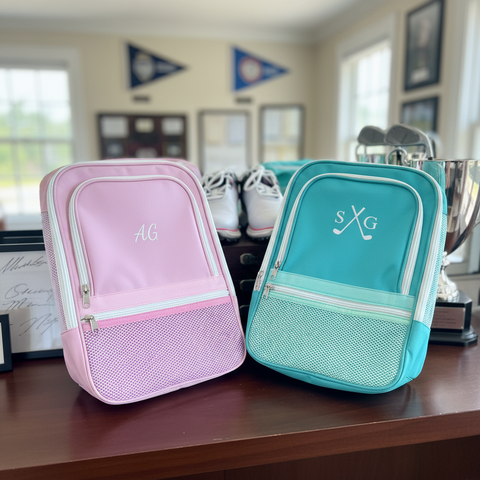
34 Perfect Women’s Golf Tournament Gifts That Score Big
Explore thoughtful women’s golf tournament gifts like personalized towels, custom accessories, engraved keepsakes, and items that make every player feel...
Read more ›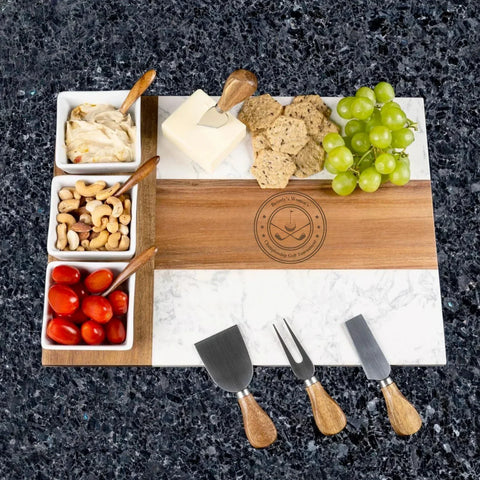
18 Women’s Golf Tournament Prizes to Make Your Event a Hit
Discover the best Women’s Golf Tournament Prizes with stylish, practical, and memorable gift ideas that celebrate skill, elegance, and achievement...
Read more ›
20 Golf Tournament Drinkware Ideas to Keep Your Game and Guests Cool
Discover 20 stylish and functional golf tournament drinkware ideas perfect for giveaways, prizes, or sponsor swag that keeps players cool...
Read more ›Planning an Outing?
Talk to George — we'll build your order.